Ascenti Reach app
Manage your recovery and access tailored video guides directly from your phone.
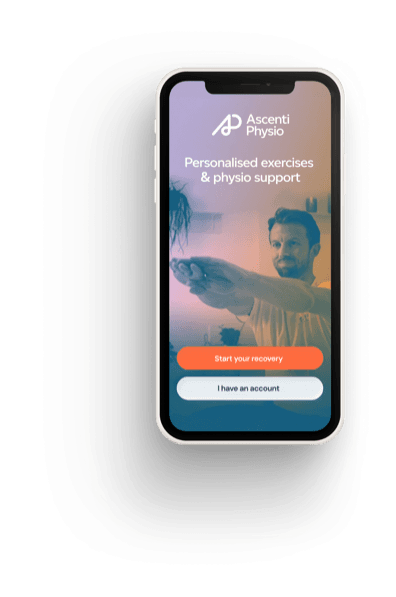
Ascenti Reach app
Manage your recovery and access tailored video guides directly from your phone.
Comfortable clothing is best, shorts and a t‑shirt or vest are often helpful. However, your comfort is most important. If clothing limits the assessment, your physiotherapist will discuss options with you.
Yes, you can bring children and minors to the appointment with you. They will have to join you in the treatment room.
No, you don’t need to bring any ID to your appointment.
Your first appointment includes four main parts:
Tell us what's going on
Your physiotherapist listens and gets to know how you’re feeling, the problem you're facing, and what your goals are.
Find the root cause
You’ll undergo an initial assessment so we can really understand how your body works, what hurts, the areas that need support, and what to do next.
Get treated
Based on that assessment, your physiotherapist starts the right treatment for you. This may include hands-on treatment, tailored exercises, or both.
Leave with a plan
Your notes and recommended exercises land in the Reach app which you can access at any time. If you require a follow-up, we’ll book you in there and then.
Follow‑up appointments focus on treatment and reviewing how you’re responding. Your physiotherapist will assess any changes in symptoms or movement and adjust your treatment plan as needed, progressing or adapting it to help you move closer to your goals.
Appointments usually last up to 30 minutes. During this time, your physiotherapist will also complete any required notes or reports.
You may be given exercises to do between sessions to support your progress. You'll be able to access these on the Ascenti Reach app.
This varies depending on your condition. Most people feel they are moving better after treatment. Occasionally, symptoms may feel slightly worse, but this should not last longer than 48 hours. Your physiotherapist will explain what to expect after treatment and guide you on how to manage symptoms safely.
Your physiotherapist will use clinical reasoning and evidence‑based practice to decide whether manual, hands-on therapy is appropriate. If you have preferences or specific reasons for wanting manual therapy included, please let your physiotherapist know so this can be considered as part of your plan.
This depends on your individual situation. In many cases, weekly appointments are recommended, but this is always a shared decision between you and your physiotherapist. Your physiotherapist will make recommendations based on your assessment and progress, while also listening to your goals and preferences to agree on the best pathway for you.
If you need to cancel or rearrange an appointment, you can do it quickly and easily through our online self-service portal.
If you want to cancel your appointment, you must let us know 24 hours before your appointment is due to take place. Unfortunately, we may have to charge you if you fail to cancel in time.
If you want to cancel your appointment, you must let us know 24 hours before your appointment is due to take place. Unfortunately, we may have to place your treatment on hold if you fail to cancel in time.
Yes. Please let us know at the time of booking and we’ll do our best to accommodate your request. In some cases, this may mean offering a different clinic location.
Visit our clinic finder page for more information about how to find your clinic, what to do when you arrive and parking and public transport options. You will also have received a letter, email or text message confirming your appointment details when you booked with us.
Physiotherapy is a recognised medical profession that can help you to elevate your health by restoring movement and function to the body if you are affected by injury, illness, disability or pain. Learn more about physiotherapy and how it can help you.
We uphold the highest standards of safety and take our responsibilities as a healthcare provider seriously, which is why we are a trusted partner to 14 NHS integrated care boards and 400 private businesses. Learn more about quality and safety at Ascenti Physio.
Ascenti physiotherapists are recognised medical professionals who have completed a degree are registered with the Health and Care Professions Council (HCPC).
Please share your feedback with us using our compliments and complaints page
You will never have to worry that your personal data is being stored inappropriately, managed badly or shared with anyone that it shouldn’t be.
We take data security and patient privacy seriously. All of our employees receive regular training and we invest in high-tech (ISO accredited) IT systems, which means that we are able to maintain the highest standards of data security.
